SEO vs Paid Ads: Where Should Your First Marketing Rupee Go in 2026?
Most small businesses pick one impulsively. The right answer actually depends on how much time you have before you need results.
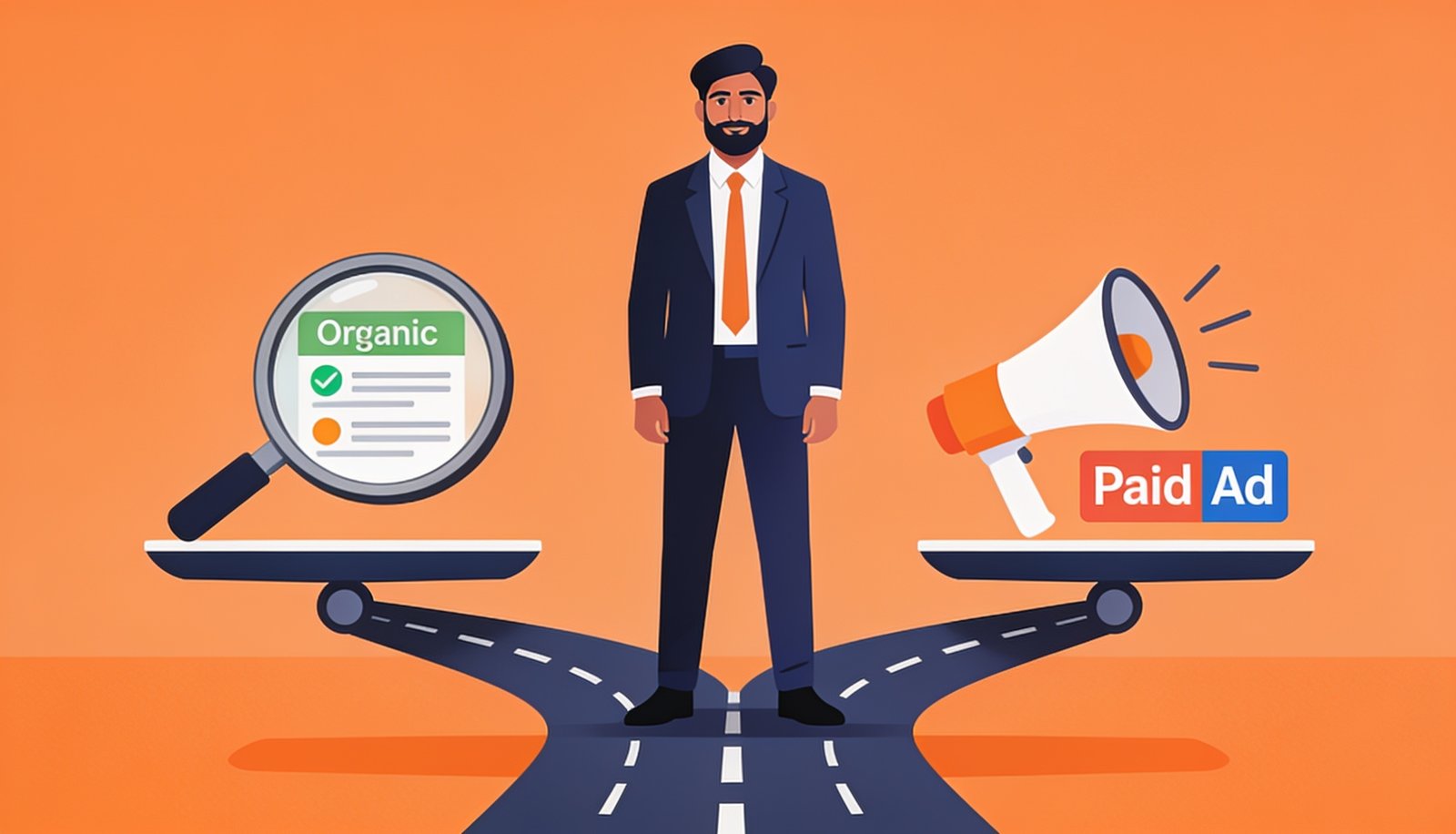
New business owners almost always ask the same question when planning their first real marketing budget: should it go toward SEO, or toward paid ads? Both work, both have a place, and the honest answer is that the right starting point depends less on which is “better” and more on your timeline, budget size, and how competitive your market already is.
The Core Difference
SEO
Earns free, ongoing traffic by ranking in organic search results. Slower to build, but compounds over time and keeps working without continuous spend.
Paid Ads
Buys immediate visibility at the top of search results or on social platforms. Fast results, but traffic stops the moment spending stops.
How Fast Each One Actually Works
This is the single biggest factor most business owners underestimate. Paid ads can put you in front of customers within hours of launching a campaign. SEO, by contrast, typically takes three to six months of consistent work before meaningful organic rankings show up — and often longer in competitive categories.
Cost Over Time Tells a Different Story
Paid ads cost roughly the same for the 100th click as they did for the first — you’re paying per visitor, indefinitely. SEO has a large upfront time investment, but once a page ranks well, it can keep generating visits for months or years without continued per-click spend. This is why SEO is often described as compounding: the return on early work keeps paying out long after the work is done.
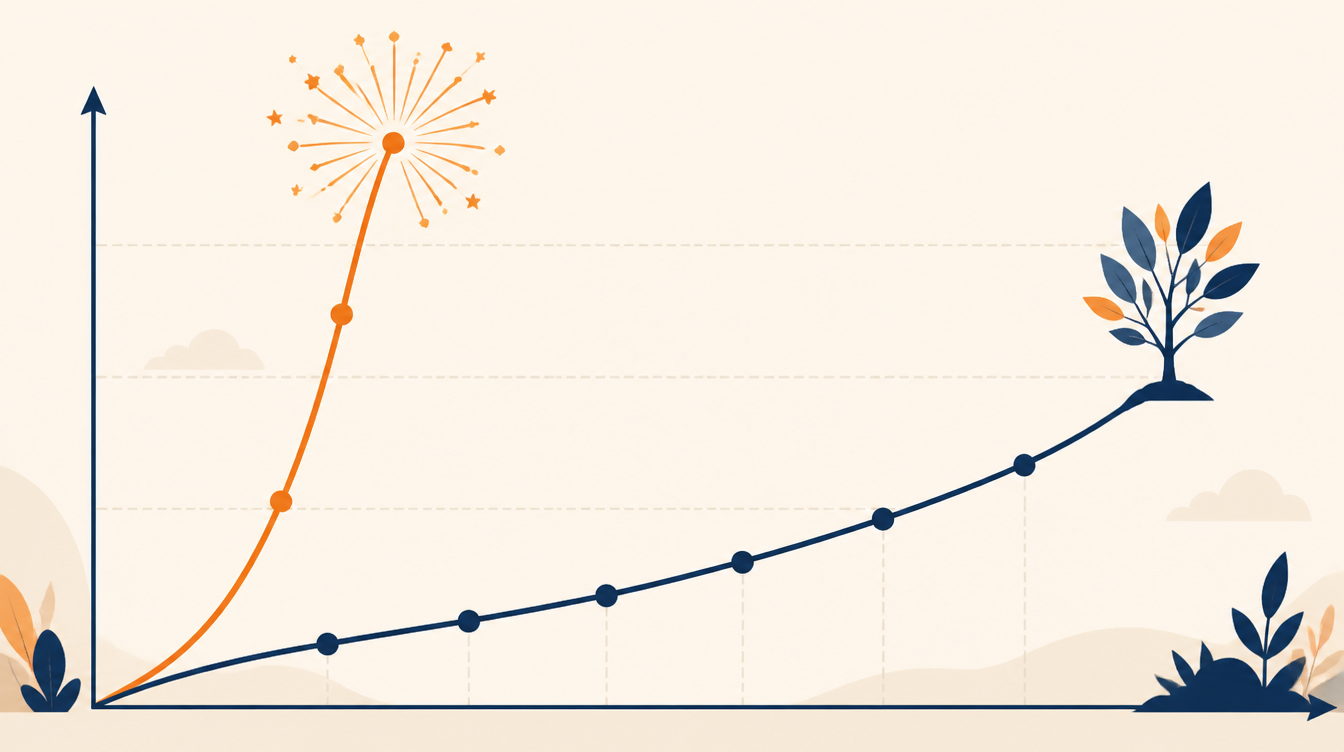
Paid ads spike quickly and drop off the moment budget stops; SEO grows slower but keeps compounding as long as content stays relevant.
When to Start With Paid Ads
If you’re launching a new product, testing which messaging resonates with customers, or need revenue soon to keep the business running, paid ads are usually the right first move — they give you fast feedback and immediate visibility while your SEO foundation is still being built in the background.
When to Start With SEO
If you’re in a category where customers already search actively for what you offer, and you have the patience to invest for a few months before seeing results, starting SEO early means you’ll have a compounding asset in place before competitors who waited to start.
The Answer Most Businesses Actually Need
In practice, the smartest approach for most small and mid-sized businesses isn’t choosing one — it’s running paid ads to generate revenue and learn what messaging works today, while simultaneously investing in SEO so that, six months from now, you’re not still fully dependent on ad spend to get found.
A Mistake We See Often
A common pattern: a business spends heavily on paid ads for a year, generates decent revenue, then cuts the budget during a slow month — and traffic disappears overnight because there was never any organic foundation underneath it. The businesses that weather budget-tight periods best are usually the ones that treated some portion of their marketing spend, even a small one, as an investment in an asset (their organic rankings) rather than pure rent (ad spend that stops producing the moment it’s turned off).
How to Think About Competitive Pressure
One factor that shifts this calculation: how competitive your specific market already is. If a handful of well-funded competitors already dominate the organic search results for your key terms, ranking organically may take considerably longer, and leaning more heavily on paid ads in the near term while building SEO in parallel often makes more sense than waiting for rankings that could take a year or more to materialize in a crowded category.
How Digital Darzee Approaches This
We typically recommend a blended budget split rather than an all-or-nothing choice — heavier on paid ads in month one to generate cash flow and real customer data, shifting that ratio toward SEO as organic rankings start to take hold, so the business becomes progressively less dependent on ongoing ad spend.
Frequently Asked Questions
Looking for help with this in practice? Explore our SEO services in Ludhiana.
Frequently Asked Questions
Should a small business start with SEO or paid ads?
If you need leads immediately, paid ads deliver faster. If you’re building for the long term and can wait 3-6 months, SEO gives a better cost-per-lead over time.
Can SEO and paid ads work together?
Yes, and they often should — paid ads can validate which keywords convert, informing which topics to prioritize for SEO content.
Which is cheaper long-term, SEO or paid ads?
SEO typically becomes cheaper per lead over time since rankings compound, while paid ads cost roughly the same per click indefinitely.
Not sure how to split your marketing budget?
We’ll help you build a realistic SEO + paid ads plan that fits your timeline and budget.
Usually replies within a few hours