
Custom APIs Explained for Business Owners: What They Are, When You Need One, and What They Cost in India
Most business owners have heard the word “API” but have a vague idea of what it means. This guide explains custom APIs in plain English — what they do, when they solve a real problem, and how they’re built.
What Is an API? (No Jargon Version)
API stands for Application Programming Interface. But forget the technical name. Here’s what it actually means for your business:
The Restaurant Analogy
Imagine a restaurant. You (the customer) want food. The kitchen makes food. But you don’t walk into the kitchen yourself — you give your order to the waiter. The waiter takes your request to the kitchen, the kitchen prepares the food, and the waiter brings it back to you. The waiter is the API. APIs are messengers that take a request from one software system, go to another system, and return the response. They let two different software applications talk to each other without you having to do it manually.
In practice: when you book an Ola, the Ola app talks to the GPS API to get your location, the payment API to charge your card, and a messaging API to send you the confirmation SMS. None of that required a human. APIs made it automatic.
What Is a Custom API — and How Is It Different?
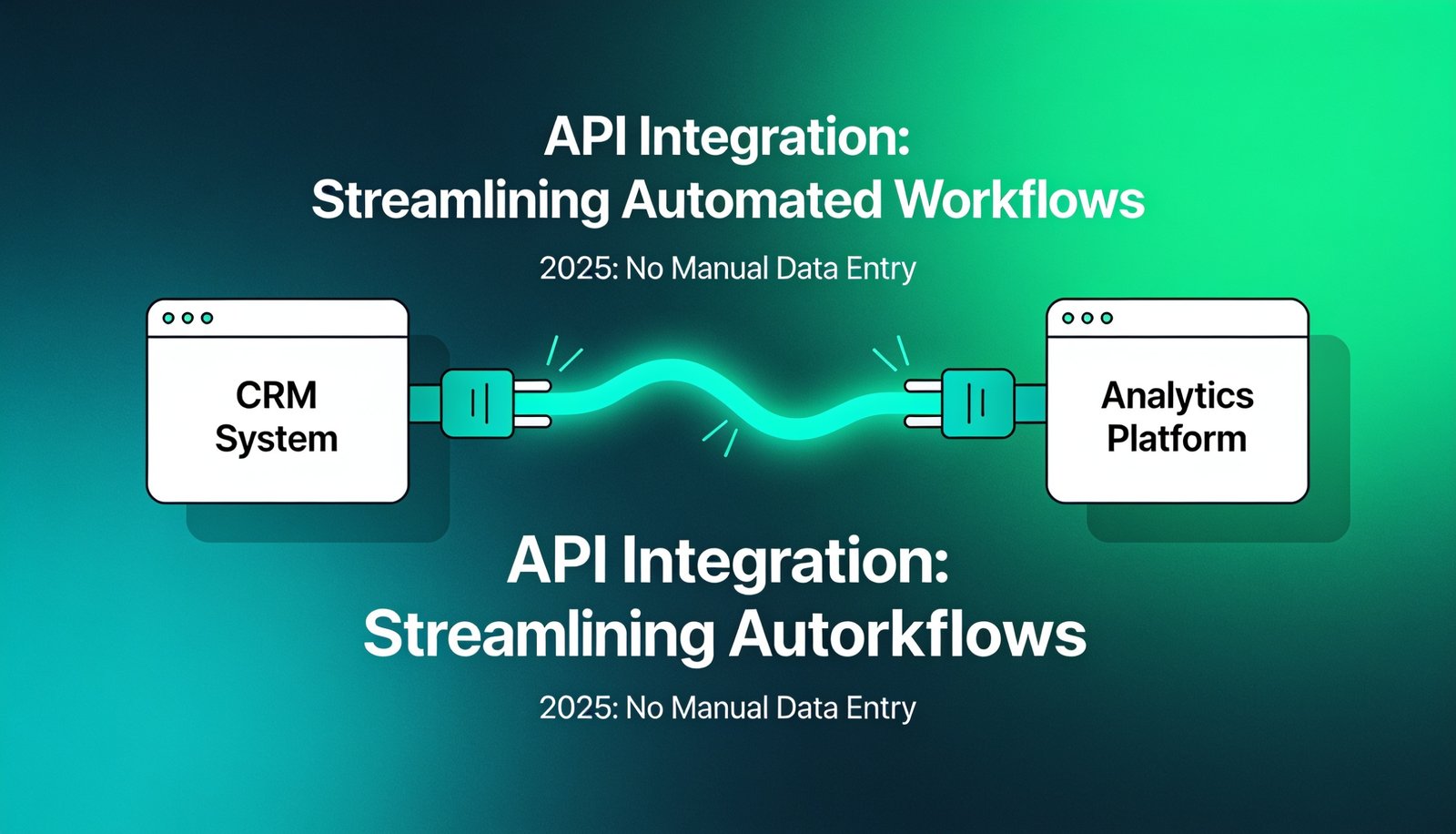
A custom API is one that’s built specifically for your business, connecting your specific systems in the exact way your workflow requires. Instead of buying a pre-built integration that does 70% of what you need (and forces you to change your process for the other 30%), a custom API does exactly what you need — and nothing you don’t.
Examples from businesses we’ve built custom APIs for:
A hosiery manufacturer in Ludhiana needed orders from their WhatsApp-based sales team to automatically appear in their inventory system, update stock levels, and generate a GST invoice — all without anyone touching a spreadsheet. We built a custom API that connected WhatsApp Business API, their inventory database, and their billing software. Three systems, talking to each other, automatically.
A retail chain needed their POS (point of sale) system to sync sales data to their accounting software every hour and send a consolidated end-of-day report to the owner’s WhatsApp. Custom API. Took 3 weeks to build. Now runs automatically, every day, without anyone thinking about it.
When Does Your Business Actually Need a Custom API?
You’re doing manual data entry between two systems
You export from one software and import into another manually. Or you have a person whose entire job is copying data from one system to another. This is the clearest signal that you need an API integration.
You need two software systems to stay in sync
Your inventory system and your ecommerce store go out of sync. Your CRM doesn’t know about new orders placed on the website. Your HR software doesn’t talk to your payroll system. APIs fix this.
You want to automate a multi-step process
Customer fills a form → order is created in CRM → invoice is generated → WhatsApp confirmation is sent → team is notified. Today a human does all 5 steps. An API makes it happen in under 1 second, automatically.
You’re building a product that other businesses will use
If you’re building an app or platform that other developers or businesses need to connect to, you need to build an API for them to integrate with. This is how SaaS products expose their functionality.
What a Custom API Typically Looks Like in Practice
Without going into code, here’s what a typical API integration we build does behind the scenes:
Event: New Order Created
// Our API automatically does all of this:
→ Reduce inventory stock in your ERP system
→ Create a GST invoice in your billing software
→ Send a WhatsApp message to the customer with order details
→ Notify your warehouse team via internal WhatsApp group
→ Log the order in your Google Sheet dashboard
→ Assign the delivery to your Shiprocket account
// Time taken: < 2 seconds
// Human involvement required: 0
This is what we build. Every step above used to be done manually by a human — taking 8–15 minutes per order. For a business processing 100 orders per day, that’s 13–25 hours of manual work eliminated every single day.