


Laravel vs Custom PHP: When Do You Actually Need a Framework?
Not every PHP project needs Laravel — and not every project can afford to skip it. Here’s how to tell which camp yours falls into.
Every business site or web app built in PHP eventually forces this question: use a framework like Laravel, or write custom PHP from scratch? It sounds like a purely technical decision, but it directly affects your project’s cost, timeline, and how expensive it is to maintain three years from now.
What “Custom PHP” Actually Means
Custom PHP doesn’t mean sloppy code — it means writing the application’s structure, routing, and data-handling logic yourself, without relying on a pre-built framework to provide those pieces. For a small, simple site, this can mean less overhead and a smaller, easier-to-understand codebase.
What Laravel Adds
Laravel is a PHP framework that provides ready-made solutions for the things almost every serious web application needs: routing, database handling, authentication, security protections, and a consistent project structure. Instead of building these from scratch, a Laravel developer configures and extends what’s already there — which speeds up development considerably once a project grows past a certain size.
Scorecard: Laravel vs Custom PHP
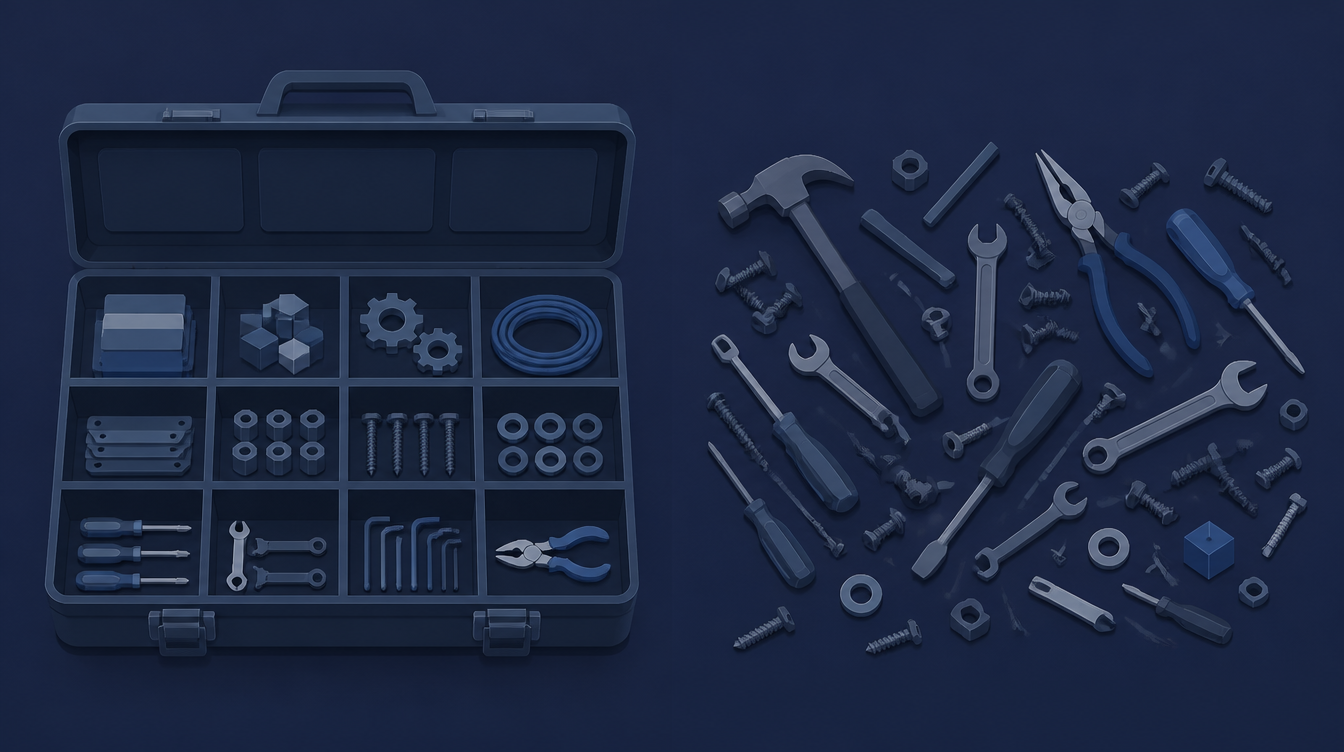
A framework is like a pre-organized toolbox — everything has a place. Custom code gives you total freedom, but you’re responsible for organizing every piece yourself.
When Custom PHP Still Wins
For a small brochure site, a single-purpose landing page, or a tool with very unusual, non-standard requirements that a framework’s conventions would fight against, custom PHP can be faster to ship and cheaper to host. If the project is genuinely simple and unlikely to grow in complexity, the overhead of a full framework may not pay for itself.
When Laravel Is Worth It
The moment a project involves user accounts, multiple related database tables, an admin panel, an API, or any expectation that it will grow and need new features over time, Laravel’s structure starts paying for itself. It’s also the safer choice when multiple developers will touch the codebase, since Laravel’s conventions make it easier for a new developer to understand an existing project quickly.
Choose Custom PHP If:
Your site is simple, unlikely to grow, has one or two developers ever touching it, and hosting cost is a tight constraint.
Choose Laravel If:
You expect growth, need logins/admin panels/APIs, want strong built-in security, or multiple developers will maintain it over time.
The Hidden Cost Most Business Owners Miss
The build cost is the part everyone budgets for, but it’s rarely the biggest cost over a site’s lifetime. What tends to matter more is how quickly a new developer can understand and safely modify the code when the original developer moves on — and this is exactly where a well-known framework like Laravel has an advantage. Because its conventions are documented and widely taught, a new Laravel developer can get productive on an unfamiliar Laravel codebase far faster than on a custom-built PHP system that follows one person’s private conventions.
A Real-World Example
Consider two businesses launching similar-looking websites: one a five-page company profile with a contact form, the other a booking platform with staff logins, calendar management, and payment tracking. The first is a textbook custom-PHP case — small, unlikely to grow much, and a framework’s overhead would add cost without adding value. The second is a textbook Laravel case — it needs authentication, structured data relationships, and will almost certainly need new features added over time, all things Laravel is built to handle cleanly from day one.
The lesson generalizes well beyond these two examples: match the tool to the actual complexity of what you’re building, not to what sounds more impressive in a project proposal. A framework used where it isn’t needed adds cost without benefit; skipping one where it’s genuinely needed usually means paying for it later in the form of a expensive rebuild.
How Digital Darzee Approaches This
We don’t default to Laravel for every PHP project, and we don’t default to custom code either — we scope what the application genuinely needs to do over its expected lifespan, then recommend whichever approach keeps both the build cost and the three-year maintenance cost lowest for that specific case.
Frequently Asked Questions
Looking for help with this in practice? Explore our custom software development services in Ludhiana.
Frequently Asked Questions
Is Laravel always better than custom PHP?
Not always — Laravel speeds up development for typical business applications, but a lean custom PHP build can be faster and simpler for very small, specific tools.
Does Laravel cost more to develop than custom PHP?
Initial development can be similar or even faster with Laravel due to built-in tools, though custom PHP may have lower long-term dependency overhead for simple projects.
When should I choose custom PHP over a framework?
If your project is small, has one specific job, and won’t grow in complexity, custom PHP avoids overhead a full framework isn’t needed for.
Not sure which approach fits your project?
Tell us what you’re building and we’ll recommend the option that’s cheapest to build and maintain.
Usually replies within a few hours