Google AI Overviews Cut Organic Clicks by 61% — How Indian Businesses Are Adapting
Ranking #1 no longer guarantees anyone sees your link. Here’s what’s actually happening and what to do about it.
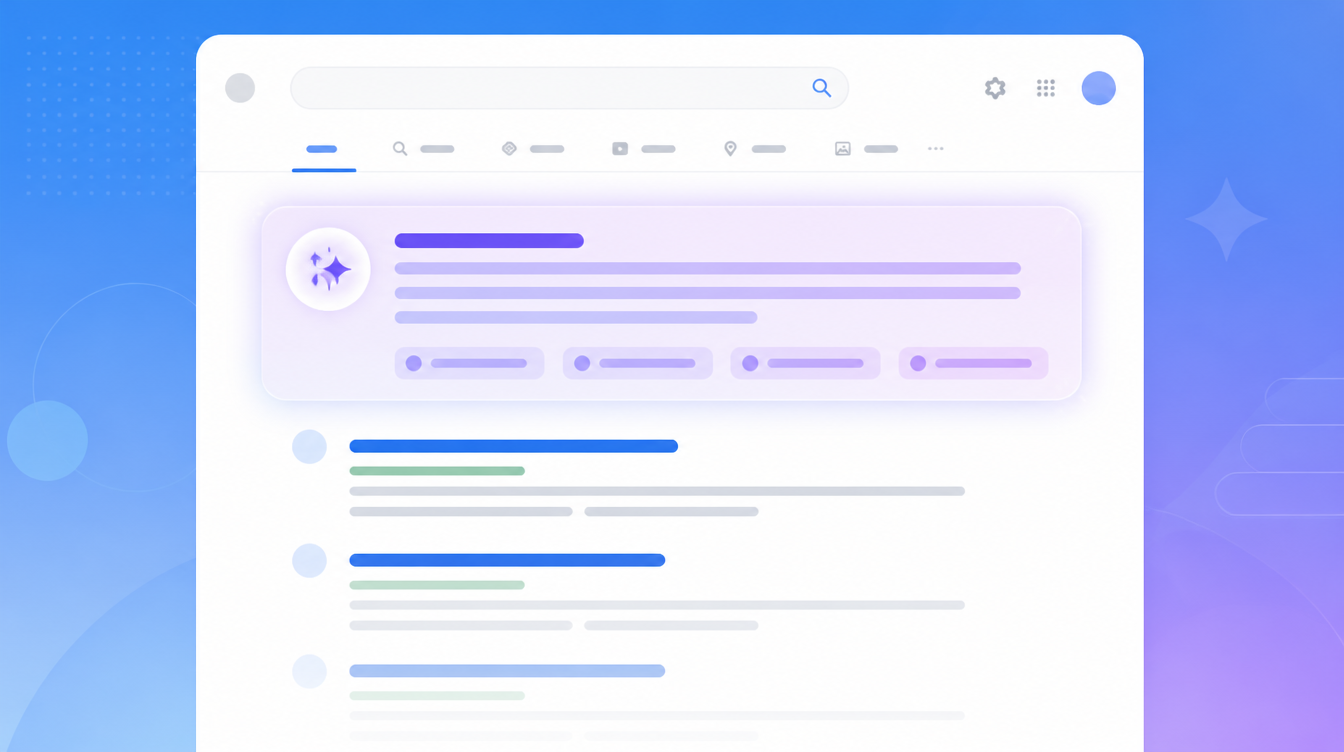
If your website’s traffic has quietly dipped over the last year despite your rankings staying roughly the same, AI Overviews are very likely the reason. Google now shows an AI-generated answer directly on the search results page for a huge share of queries, and for the first time, being the top organic result doesn’t guarantee anyone actually clicks through to your site.
61% CTR drop for uncited pages
35% more clicks for cited brands
How Big Is This Shift, Really?
As of March 2026, AI-generated answers appear on roughly 48% of all search queries, up from about 34.5% just three months earlier — and the fastest-growing category is exactly the kind of informational, how-to content most business blogs are built around. That’s not a niche shift happening at the edges of search; it’s becoming the default experience for a huge share of everyday queries.
The Click-Through Gap
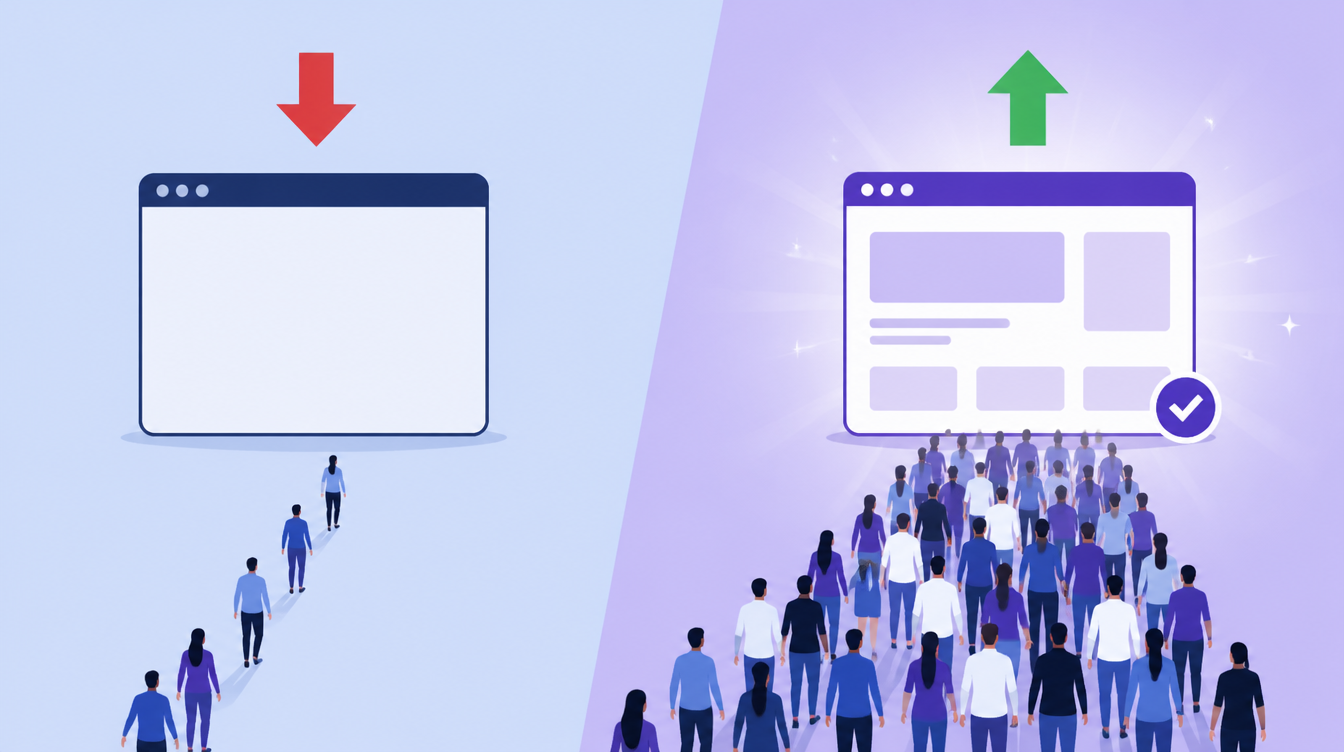
Pages that get cited inside the AI Overview see roughly 35% more clicks than before. Pages that rank well but aren’t cited have seen organic click-through rates fall as much as 61% on the same queries — the traffic just goes to whichever source Google’s AI decided to quote.
Why Ranking #1 Isn’t Enough Anymore
The part that surprises most site owners: citation overlap with the traditional top-10 organic results has weakened sharply, from around 76% in mid-2025 down to somewhere between 17% and 54% in early 2026. In plain terms, being ranked first no longer means you’ll be the one quoted in the AI answer. Google’s summary system now favours content that answers a question clearly and directly, over content that simply ranks well by traditional signals.
What Actually Gets Cited
The pattern researchers keep finding is consistent: AI Overviews reward content that defines concepts clearly, answers the implied question in the first few sentences, and structures information in a way that’s easy to lift and summarise — short, direct answers near the top of a section, followed by supporting detail. Pages written as long, meandering build-ups to an answer buried three screens down tend to get skipped over entirely, regardless of how well they otherwise rank.
Adapting Without Starting Over
This doesn’t mean rewriting your entire site. It means restructuring existing content so the direct answer appears early, with clear headings that match how people actually phrase questions, and supporting detail that follows rather than precedes the answer.
What This Means for Your Content Strategy
- Lead with the answer — put the direct response in the first two or three sentences of a section, not at the end.
- Match real questions — phrase subheadings the way people actually type or ask them, not as generic marketing labels.
- Keep authority signals strong — clear sourcing, real data, and a genuine point of view still matter for being trusted enough to cite.
- Don’t abandon SEO fundamentals — this changes what gets cited, not whether ranking well still helps you get considered at all.
Which Kinds of Businesses Are Feeling This Most
Informational and how-to queries are seeing the fastest growth in AI Overview coverage, with more than 70% of results pages in that category now showing an AI-generated answer. That means businesses whose content strategy leans heavily on explainer posts, “how does X work” guides, and general educational articles are seeing the biggest click-through impact. Businesses whose content is more transactional or highly specific to a local service — “custom ERP software Ludhiana,” for instance — are affected less, simply because those queries are less likely to trigger a generic AI summary in the first place.
The Silver Lining Most People Miss
It’s easy to read all this as bad news, but there’s a real upside buried in the data: when your click-through rate on a page does hold up despite an AI Overview appearing, the visitor who does click tends to be a higher-quality one — someone who read the summary, still wanted more, and came to your site specifically for depth. Lower volume, higher intent, is not automatically a worse outcome for a business that converts on quality rather than raw traffic count.
How Digital Darzee Approaches This for Clients
We’re restructuring new content — and auditing existing posts — around answer-first formatting: a clear, direct response near the top of every section, followed by the depth that builds trust and authority. The goal isn’t to chase the AI Overview specifically, but to write the way it already rewards: clearly, directly, and with a genuine answer up front.
Frequently Asked Questions
Looking for help with this in practice? Explore our SEO services in Ludhiana.
Frequently Asked Questions
How much have AI Overviews reduced organic clicks?
Recent data shows organic click-through rates dropping by as much as 61% for queries where Google AI Overviews appear directly in search results.
How can businesses adapt to AI Overviews reducing clicks?
Structuring content to be the cited source within AI Overviews, and diversifying traffic sources beyond organic search, both help offset the click decline.
Do AI Overviews affect all types of searches equally?
No, informational queries are affected most, while transactional and branded searches tend to still drive traffic to the actual website.
Not sure if your content is AI-Overview-ready?
We’ll review your top pages and show you exactly what to restructure.
Usually replies within a few hours