
Performance Marketing Budget Allocation: How Much Should Ludhiana Businesses Spend Per Platform?
A practical starting split for Google Ads, Meta Ads, SEO and email — and how to adjust it once you have your own data.
“How much should we spend on Google versus Instagram?” is one of the most common questions we get from business owners starting out with performance marketing, and the honest answer is that there’s no universal number — it depends on your product, your sales cycle, and how people actually search for what you sell. That said, most Ludhiana businesses starting from zero are better off with a deliberate starting split than a gut-feel guess, and adjusting from there based on real results.
A Practical Starting Split
For a typical local or regional business with no prior campaign data, this is a reasonable place to start before you have your own numbers to optimise against:
Meta Ads — awareness & visual products
SEO/Content — compounding, long-term traffic
Email — lowest cost per repeat customer
Why Google Ads Usually Gets the Largest Share First
Google Ads captures people who are already looking for what you sell — someone searching “custom ERP software Ludhiana” has effectively raised their hand. That high-intent traffic tends to convert at a much better rate than cold audience targeting, which is why it’s usually worth the largest single slice of budget when you’re starting out and still learning what works.

Each channel plays a different role in the funnel — search captures existing demand, social builds awareness for people who haven’t heard of you yet, and email keeps existing customers coming back at almost no incremental cost.
Where Meta Ads Actually Earns Its Share
Meta Ads shine at the awareness stage — reaching people who aren’t actively searching yet but would respond well to seeing your product, especially if it’s visual or aspirational. It also tends to be the more cost-efficient channel for retargeting people who’ve already visited your site but didn’t convert the first time.
Why SEO and Email Deserve a Slice Even Though They’re Slower
SEO and content take longer to show results than paid ads, but the traffic they eventually generate is close to free per visitor compared to ongoing ad spend — which is exactly why it deserves a steady, if smaller, budget commitment from day one rather than being treated as an afterthought once the ad budget is exhausted. Email, similarly, is usually the cheapest channel per repeat sale, because you’re marketing to people who already know and trust you.
How to Actually Adjust This Once You Have Data
Run the starting split for 60-90 days
Long enough to get statistically meaningful data on each channel’s cost per lead.
Compare cost per qualified lead, not just cost per click
A cheaper click that never converts is worse than a pricier one that does.
Shift 5-10% toward whatever is outperforming
Small, regular reallocations beat one dramatic overhaul.
Re-check every quarter, not every week
Campaign data needs time to stabilise before it’s worth acting on.
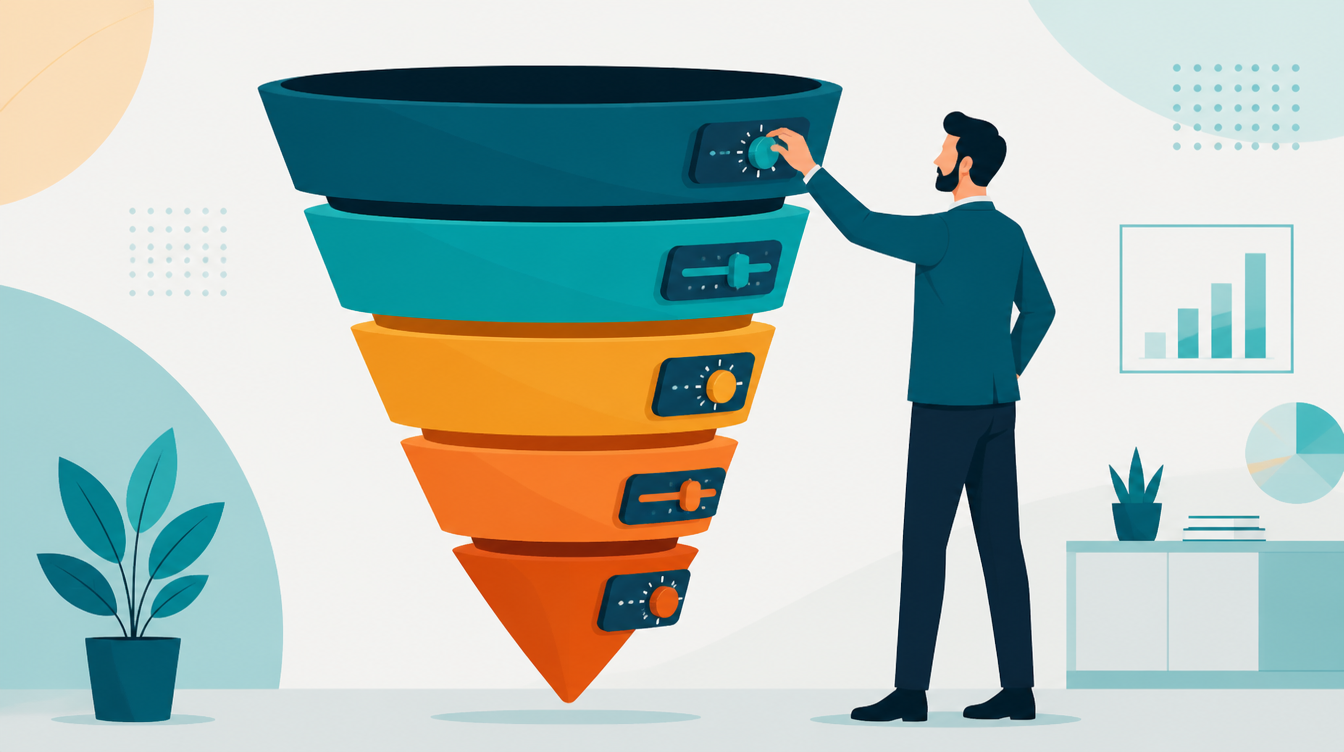
Think of your budget as adjustable dials at each funnel stage, not a fixed decision made once and left alone.
Common Mistakes Businesses Make With Budget Allocation
The most frequent one is putting the entire budget into a single channel because a competitor mentioned it worked for them, without accounting for how different their product, audience, or sales cycle actually is. The second is reacting too quickly — pulling money out of a channel after one slow week instead of giving it enough time to generate reliable data. The third is ignoring email and organic entirely because they don’t feel as “active” as running ads, even though they’re often the cheapest source of revenue from customers you already have.
What Changes as Your Business Grows
Early on, a wider net across multiple channels helps you learn quickly which one actually fits your business. As you scale and get more data, most businesses find it makes sense to concentrate budget more heavily into whichever one or two channels are proving to convert best, while keeping a smaller ongoing presence on the others so you’re not entirely dependent on a single platform’s algorithm or ad costs.
How Digital Darzee Approaches This for Clients
We set up campaigns with this kind of starting split, then review actual cost-per-lead data with clients every month so budget shifts happen based on what’s genuinely working for their business, not on which platform happens to be trending in marketing blogs that quarter.
Frequently Asked Questions
Looking for help with this in practice? Explore our digital marketing services in Ludhiana.
Frequently Asked Questions
How much should a small business spend on performance marketing?
It depends on industry and goals, but a common starting approach is testing multiple platforms with a modest budget before concentrating spend on what converts best.
Should budget be split evenly across Google and Meta Ads?
No — allocation should follow where your specific audience and product convert best, which often means an uneven split, not a 50/50 default.
How often should ad budget allocation be reviewed?
Monthly at minimum, since platform performance and costs shift often enough that a quarterly-only review risks wasting significant budget on underperforming channels.
Not sure how your current spend is actually performing?
We’ll review your existing campaigns and show you where the budget should really be going.
Usually replies within a few hours