
Why Posting Consistently Beats Going Viral Once — And What Consistent Brands Actually Do Differently
Every brand wants to go viral. Almost none of them understand that virality is a lottery ticket. Consistency is a compounding investment. Here’s the data and the strategy behind brands that win on social over time.
The Viral Post Trap
We’ve seen it happen with enough clients to call it a pattern. A business posts something — a behind-the-scenes video, a meme that lands, a product launch reel — and it goes viral. 50,000 views, 2,000 followers overnight, comments flooding in. The business owner thinks they’ve cracked the code. They wait for the next viral post.
Three months later, their average post is getting 200 views, their new followers have completely disengaged, and the brand is back where it started — or worse, because now there’s the psychological weight of “we used to get 50K views.”
Viral moments are not a strategy. They’re an event. And like all events, they end. What builds real, lasting brand presence on social media is something far less exciting — but far more powerful: showing up every single week, without fail, with content your specific audience actually values.
Virality vs Consistency: What the Numbers Actually Show
📅 The Consistent Brand
- Average post: 1,500–4,000 views
- Month 1: Slow, 200–500/post
- Month 6: 3,000–8,000 per post
- Follower engagement: 5–8% sustained
- Brand recall after 90 days: High
- Leads per month from organic: 15–40
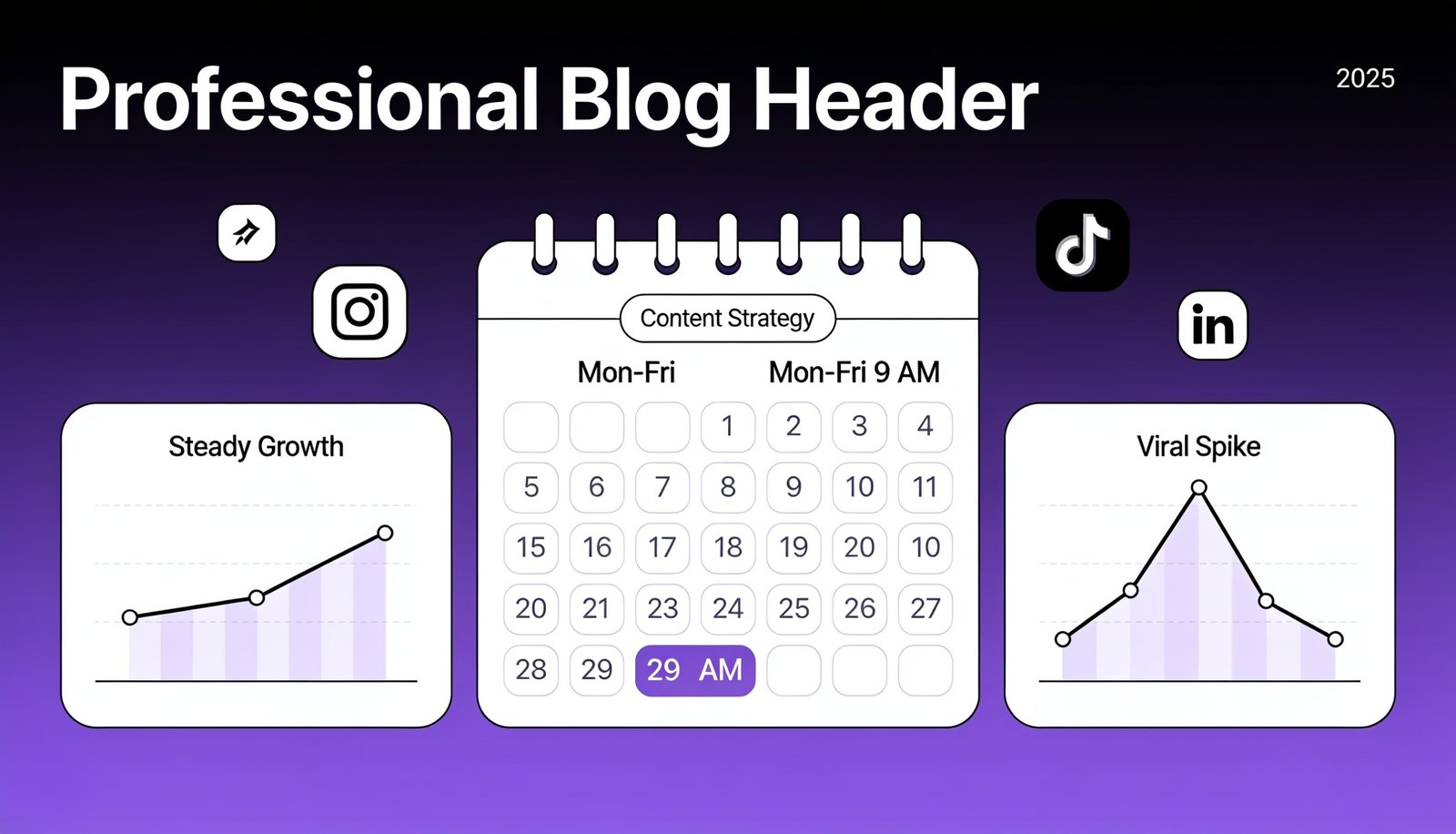
The consistent brand doesn’t have a moment. It has a momentum. By month 6, the algorithm recognises it as a reliable content source, serves it to more people, and the audience has heard from it enough times to actually trust it. That trust converts to leads and sales in a way that one viral post never does.
What Consistency Actually Means (It’s Not Just Posting More)
Consistency in Frequency
Post 3–4 times per week on your primary platform, minimum. Not when you feel like it, not when you have something “worth sharing” — on a schedule, every week, no matter what. The algorithm rewards predictability. So does your audience.
Consistency in Content Format
Pick 2–3 content formats and repeat them. Tutorial Tuesday. Client result Wednesday. Behind-the-scenes Friday. Your audience should know what to expect from you. Surprise is for entertainment brands. Trust-building brands build patterns.
Consistency in Voice and Tone
Your captions, your visual style, your colour palette, your emoji usage — all of it should feel recognisably “you” across every post. Inconsistent visual identity makes a page feel amateurish even if the content is good.
Consistency in Value Type
Pick a lane: educational, inspirational, behind-the-scenes, or promotional. Mixing all four randomly confuses the algorithm and your audience. The fastest-growing brands we’ve worked with focused on one primary value type — usually educational — and executed it relentlessly.
How to Build a Consistency System That Actually Holds
The reason most brands fail at consistency is not lack of ideas — it’s lack of a system. Here’s the system we use for every client we manage social media for:
Monthly content planning session (2 hours): Plan 12–16 posts for the month. Pick topics from a recurring question bank, new work you’re doing, and seasonal angles. Write hooks for each post. Assign formats.
Weekly batch creation (3 hours): Create visuals for the next week’s posts in one session. Write captions. Schedule everything using a scheduling tool — Buffer, Later, or Meta Business Suite.
Daily engagement (15 minutes): Reply to every comment. Respond to DMs. Engage with posts from accounts in your niche. This 15-minute habit signals to the algorithm that your account is active and worth distributing.
Monthly performance review (1 hour): Look at which posts got the most reach, saves, and DMs. Do more of what worked. Drop or modify what didn’t. No opinions — just data.
That’s 400–450 minutes per month — about 7 hours. That’s the time investment for a properly managed social media presence. If you don’t have 7 hours a month, outsource it. The cost of outsourcing will be recovered many times over if you’re consistent.