
Task management software for factories exists because WhatsApp groups, useful as they are for quick messages, were never built to answer one basic question: who is doing what, and is it actually done. An estimated 97% of Indian MSMEs already run some part of their business on WhatsApp, yet the same app that closes a sales order in seconds usually can’t tell a supervisor whether yesterday’s rework got finished.
That gap is not a WhatsApp failure — it is a mismatch. A chat app is built for conversation, not for tracking status across dozens of open jobs on a shop floor. Task management software for factories is built for exactly that second job.
WhatsApp groups vs task management software for factories: a side-by-side look
| Aspect | WhatsApp Groups | Task Management Software |
|---|---|---|
| Finding a task’s current status | Scroll and search through chat history | One glance at a status board |
| Accountability | Whoever replied last, if anyone | Task assigned to one named owner |
| Deadlines | Mentioned in text, easy to miss | Due dates with automatic reminders |
| Reporting to owners | Manual summary, someone’s memory | Real-time dashboard, no summary needed |
| New shift handover | Re-reading old messages | Open tasks visible instantly |
| Searchable history | Buried under unrelated chats | Filterable by job, date, or worker |
Signs you’ve outgrown WhatsApp for task tracking
- ✓Supervisors ask “is this done?” more than once a day on the same job
- ✓A finished task only gets noticed when someone remembers to mention it
- ✓New workers can’t tell what’s pending without asking around
- ✓Owners want a report and someone has to scroll back through chats to build it
- ✓Important instructions get buried under unrelated messages within hours
- ✓Two people sometimes do the same job because no one knew it was already assigned
Workers switch between messaging and work apps up to 10 times an hour, and studies estimate this app-hopping costs the average worker close to 32 days a year in lost focus — time a factory floor with tight production targets can’t spare.
What changes when Ludhiana factories switch to task management software
Ludhiana alone has more than 150,000 registered MSMEs, and factory owners here are used to running lean. A pan-India MSME digital index found that 68% of small businesses saw measurable growth after adopting a digital tool, with efficiency and better tracking cited as the biggest gains.
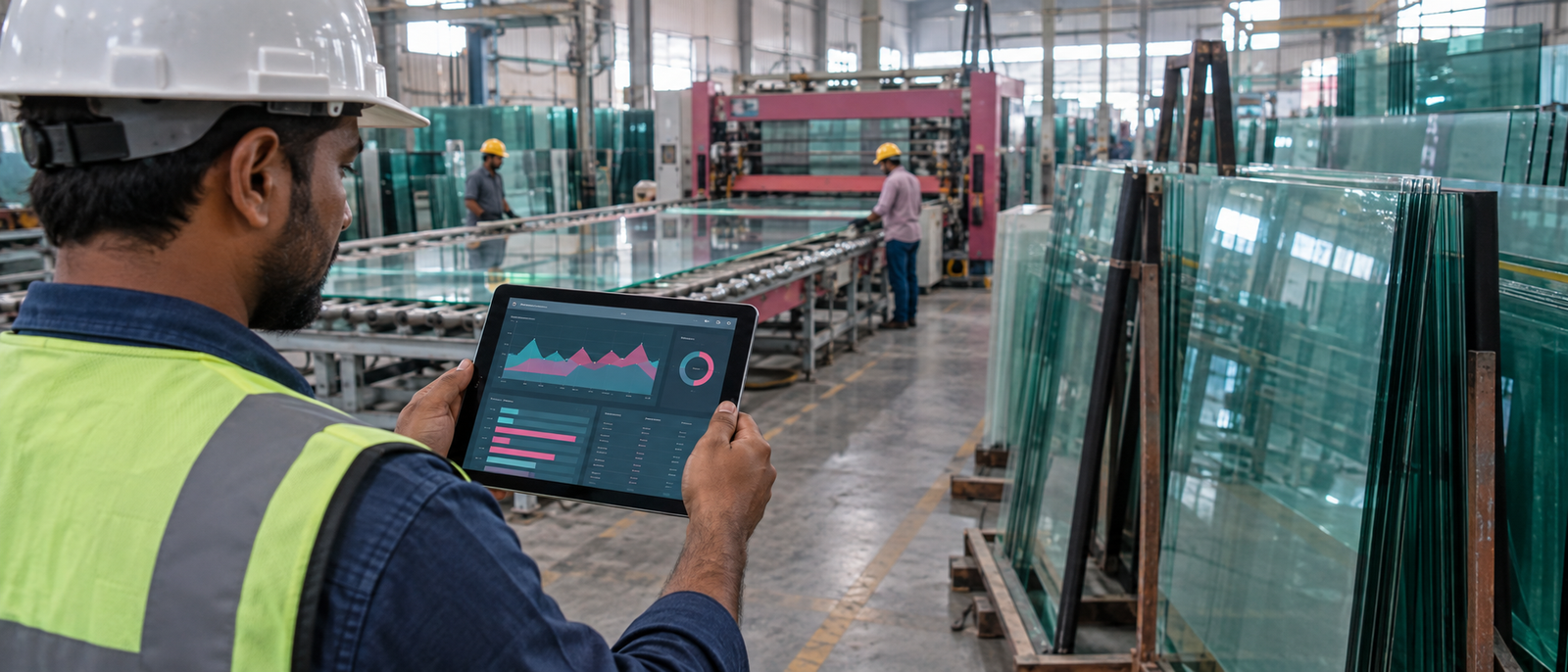
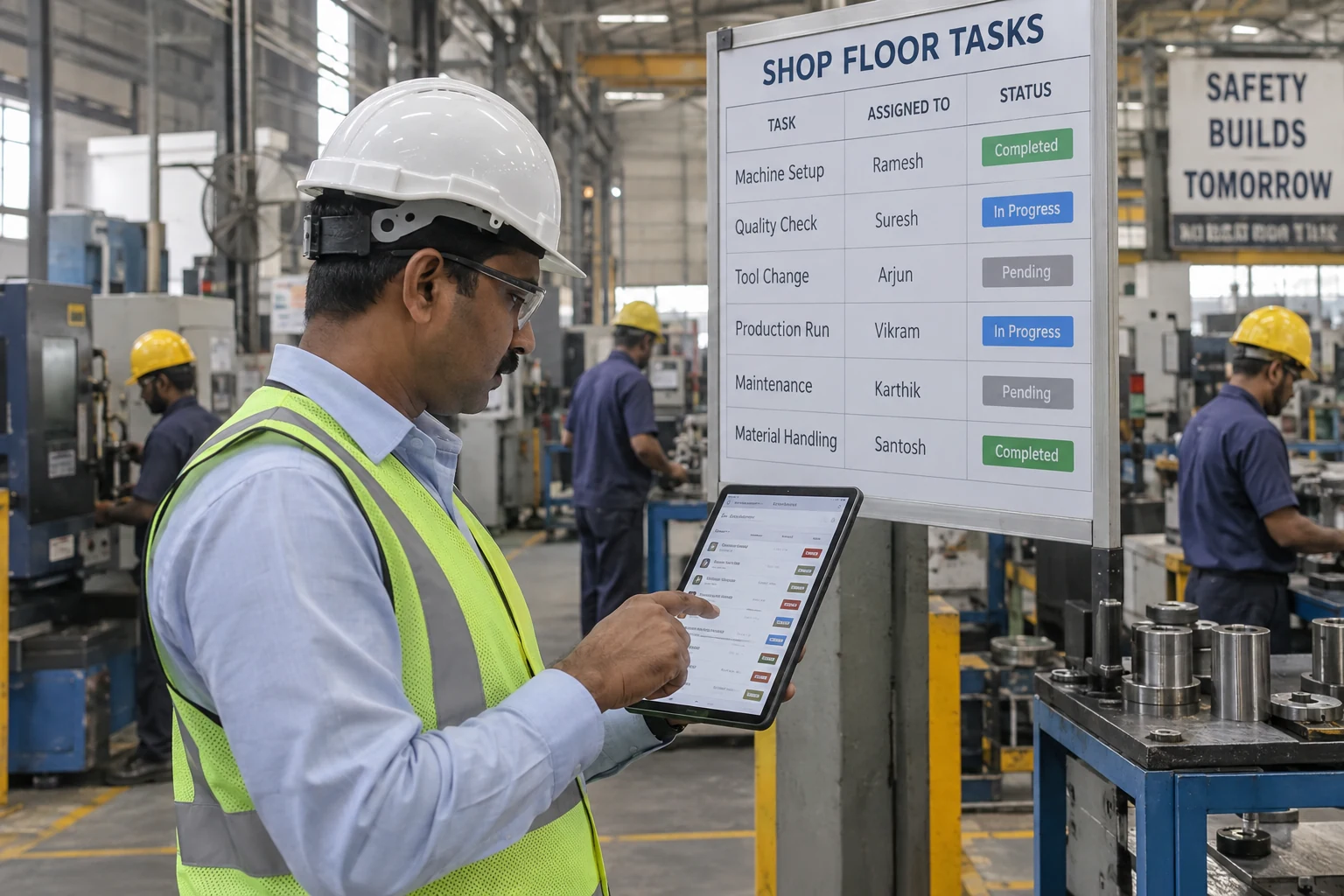
For a factory, that usually means one thing: task management software for factories replaces the daily “what’s the status” phone calls with a board anyone can check in ten seconds, whether it’s a production task management view for the shop floor or a task assignment software business owners use to track vendor follow-ups.
This fits the same pattern seen across other Ludhiana manufacturing shifts — from foundries adopting purpose-built ERP to bicycle parts units tracking dispatch by QR scan — where a dedicated tool quietly replaces a habit that used to run on memory and WhatsApp.
Frequently asked questions
Will task management software for factories work for a 15-20 worker unit?
Yes — smaller units often see the fastest results since there are fewer habits to unlearn and supervisors can roll it out across the whole floor within days.
Is task management software for factories difficult for shop-floor workers to learn?
Most systems are simpler than WhatsApp itself — workers usually just tap a task to mark it done, with no typing required for daily use.
Can it work alongside WhatsApp instead of replacing it?
Yes. Many factories keep WhatsApp for quick chat and supplier calls while moving task tracking, deadlines, and reporting into dedicated software.
Does shop floor task tracking work without smartphones for every worker?
Supervisors can manage tasks centrally on one device or a shared screen, so not every individual worker needs their own smartphone or login.
How long does it take to see results after switching?
Most factories notice fewer status-check interruptions within the first week, with full adoption typically settling in over two to three weeks.
Choosing task management software for factories isn’t about replacing WhatsApp entirely — it’s about giving your shop floor a place where “who’s doing what” has one clear answer instead of a chat thread to scroll through.
What a typical day looks like after switching
A supervisor starts the shift by opening one board instead of scrolling three WhatsApp groups. Every open job shows its owner, its deadline, and its current status at a glance.
When a task is marked done, it disappears from the active list automatically — no one has to remember to announce it. That single change is often what factory owners notice first after adopting task management software for factories.
A quick example from the shop floor
A rework order comes in at 11am. Under the WhatsApp model, the supervisor types a message, hopes the right worker sees it, and checks back later by asking around.
Under task management software for factories, the same order gets assigned to one worker with a deadline. The supervisor sees it move from “in progress” to “done” without sending a single follow-up message — and the owner’s evening report builds itself from the same data.
How to choose task management software for factories without overcomplicating it
Most factory owners in Ludhiana do not need an elaborate enterprise platform on day one. The safest starting point is a tool that lets a supervisor create a task, assign it to a named worker, and mark it done from a phone, because that single loop already fixes the biggest gap left by WhatsApp groups: nobody has to scroll to find out where things stand.
A second, equally practical test is whether the software works on the kind of phones actually used on your shop floor. Many production and maintenance teams share a common entry-level Android handset, so task management software for factories should stay light, load fast on a weak signal, and not demand a data plan the unit is not already paying for.
Third, look for basic reporting rather than a full analytics suite. A weekly view of who completed how many tasks on time is usually enough to have a fair, data-backed conversation with a supervisor or shift lead, instead of relying on memory or a scroll through old WhatsApp messages when something goes wrong.
Finally, treat the rollout as a small pilot. Running the new system alongside WhatsApp for two to three weeks on a single line lets a factory confirm workers will actually update task status, before retiring the group chat for that shift altogether.
None of this requires replacing every tool a factory already relies on. Task management software for factories works best alongside existing systems such as attendance registers or basic inventory sheets, handling only the piece those tools were never built for: a live, shared record of who is doing what, right now, on the floor.
Want task management software built for your factory floor?
Talk to Digital Darzee about a system that fits how your shop floor actually works.
Source: WhatsApp/WhatsApp Business adoption among Indian MSMEs via Entrepreneur India; app-switching productivity loss via RingCentral; Ludhiana MSME count via SME Communities; MSME digital growth via the MSME Digital Index 2024.