


PHP 8.5 Is Here: The New Pipe Operator and 5 Other Changes Worth Knowing
Released July 2, 2026, this update makes everyday code noticeably easier to read — without breaking anything you’ve already built.
PHP 8.5 officially released on July 2, 2026, and while it isn’t a dramatic overhaul, it includes a handful of changes that meaningfully improve day-to-day code readability. If your business runs on PHP or Laravel, here’s what actually changed and whether you should plan an upgrade.
The Headline Feature: The Pipe Operator
The most talked-about addition in this release is the new pipe operator (|>), which lets developers chain function calls left-to-right instead of nesting them inside out. It’s a small syntax change with an outsized readability benefit for anyone who has ever had to untangle deeply nested function calls to understand what a line of code actually does.
$result = strtoupper(trim(str_replace(‘ ‘, ‘-‘, $input)));
// With the new pipe operator — reads left to right
$result = $input |> str_replace(‘ ‘, ‘-‘, …) |> trim(…) |> strtoupper(…);
Five Other Changes Worth Knowing About PHP 8.5
URI Extension
A built-in extension to parse, normalize, and handle URLs following RFC 3986 and WHATWG URL standards, without a third-party library.
Clone With Expression
A new syntax to clone an object and update specific properties in one step — especially useful for read-only classes.
#[NoDiscard] Attribute
Warns developers when a function’s return value is silently ignored, catching a common class of bugs earlier.
Static Closures in Constants
Static closures and first-class callables can now be used in constant expressions, including attribute parameters.
Array Helper Functions
New convenience functions to grab the first or last array element without writing boilerplate code.
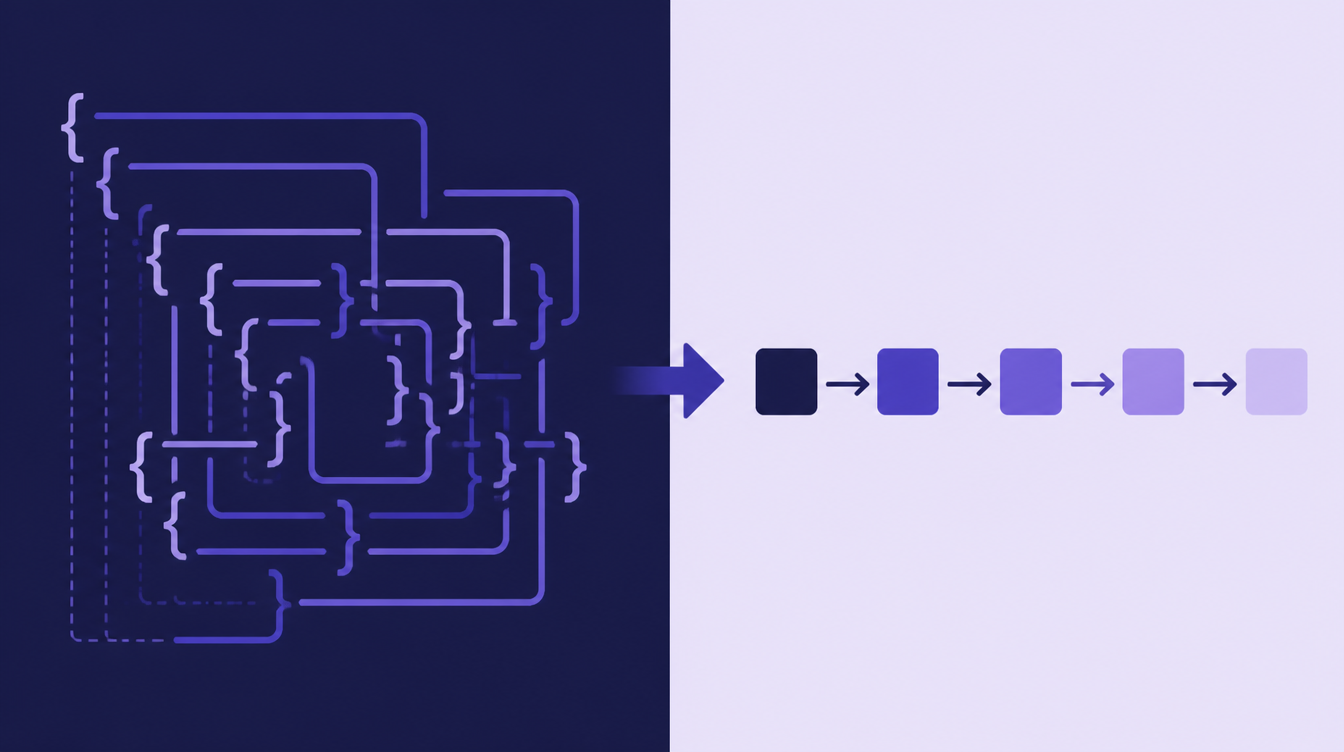
The pipe operator doesn’t change what the code does — it changes how easily the next developer can understand it six months later.
Should You Upgrade Your Application to PHP 8.5?
For most existing applications, there’s no urgency — this release doesn’t remove features that would break older code in typical use cases, and the previous version, PHP 8.4, remains actively supported. New projects starting now have good reason to target the latest version from day one, particularly if the codebase does heavy data transformation where the pipe operator’s readability benefit compounds over hundreds of function calls.
Upgrade Readiness Check
Before upgrading a production PHP application, confirm your hosting provider supports the new version, check that key dependencies (Laravel, Composer packages) have compatible releases, and run your test suite against it in a staging environment before touching production.
What This Release Signals About PHP’s Direction
Beyond the individual features, this release continues a multi-year pattern of the language prioritizing developer ergonomics and safety over adding entirely new paradigms. Readonly properties, enums, and now the pipe operator and clone-with syntax all share a theme: making code that’s already correct easier to read correctly, rather than introducing new ways to write code that behaves unpredictably. For businesses relying on PHP as a long-term platform, this steady, conservative evolution is generally a reassuring sign rather than a reason for concern.
A Practical Migration Checklist
For teams planning an eventual move, a sensible order of operations looks like this: first confirm your hosting environment and CI pipeline can run the new version alongside your current one, then update development dependencies and run the full automated test suite, then manually verify any code that relies on deprecated behavior flagged by the interpreter, and only then schedule a production deployment during a low-traffic window. Skipping the staging step is where most avoidable upgrade incidents happen.
Why This Matters Beyond Just Syntax
Language-level readability improvements like the pipe operator tend to have a bigger real-world impact than they get credit for, because most of the cost of software over its lifetime isn’t writing it — it’s a different developer, months or years later, understanding and safely modifying it. We discussed a related version of this trade-off in our earlier piece comparing Laravel and custom PHP, where long-term maintainability was the deciding factor more often than raw build speed.
How Digital Darzee Approaches This
We evaluate every new PHP release, including PHP 8.5, for new client projects as a matter of course, adopting features that genuinely improve code quality and maintainability rather than upgrading reflexively for every release. You can review the complete technical changelog on the official PHP.net release announcement if you want the full list of changes.
Frequently Asked Questions
Looking for help with this in practice? Explore our custom software development services in Ludhiana.
Frequently Asked Questions
What is the biggest new feature in PHP 8.5?
The pipe operator, which lets developers chain function calls in a more readable left-to-right order instead of deeply nested function calls.
Is PHP 8.5 backward compatible?
Yes, PHP 8.5 is designed to be backward compatible with 8.4 code, so most existing applications can upgrade without major rewrites.
Should I upgrade to PHP 8.5 right away?
It’s safe to test in staging first, but there’s no urgent reason to delay — the new features are additive, not breaking changes.
Wondering if your PHP application should upgrade?
We’ll assess compatibility and handle the upgrade safely, without disrupting your live site.
Usually replies within a few hours