

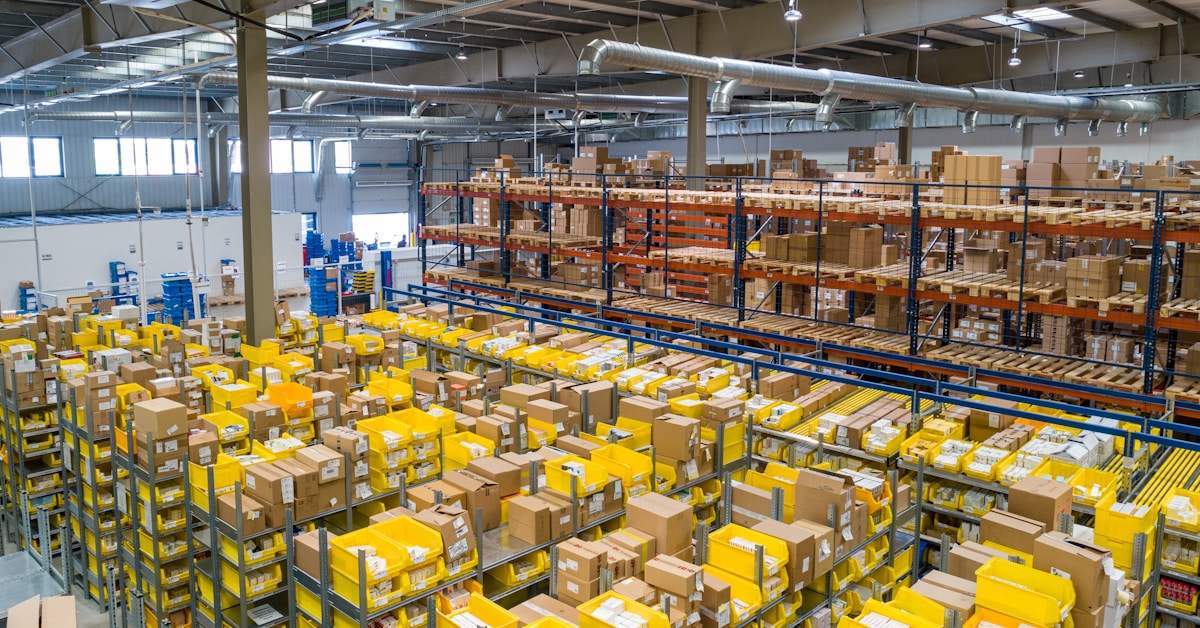
Hosiery Inventory & Order Management — Ludhiana
When Your Stock Lives Across 14 Excel Files, You Don’t Have an Inventory System — You Have a Daily Crisis
Every hosiery manufacturer in Ludhiana is running hundreds of SKUs — across yarn counts, fabric types, colours, sizes, and buyer specifications. The moment your production scale crosses a point where one person can’t hold it all in their head, Excel stops being a tool and starts being a liability. This page is about what actually goes wrong, and what a purpose-built inventory and order management system does differently.
Typical active SKUs at a mid-size hosiery unit
People touching inventory data with no central record
Live visibility on committed vs available stock
A Week Without a System — What Actually Happens
This isn’t a hypothetical. It’s a composite of what manufacturers in Ludhiana describe in their first conversation with us.
Why Hosiery SKU Complexity Makes Generic Software Fail
Off-the-shelf inventory tools are built for simple product businesses. Hosiery isn’t simple.
(ankle, mid-calf, knee, thermal…)
(20s, 30s, 40s, combed, carded…)
(per product category)
(per product)
packing formats
(export / domestic / seconds)
What the Software Tracks — Across Your Entire Operation
Six interconnected modules, each solving a specific gap in how hosiery inventory and orders are managed today.
Live Multi-Location Inventory — By SKU, Lot, and Location
Every item tracked at SKU level — colour, size, count, grade. Inventory split between finished goods store, dispatch area, buyer commitments, and in-transit. When a salesperson books an order, committed stock is deducted instantly. What’s available in real time is what’s actually available — not what was available on Tuesday when someone last updated the file.
Yarn & Raw Material Input with Consumption Mapping
Yarn arrivals logged against purchase orders. Each production batch pulls from the yarn stock. The system tells you current yarn quantity, which production lots consumed which yarn bale, and how much yarn remains after current committed production — before you start the next batch, not after it runs short.
Order Management With Buyer-Specific Specs
Each buyer has their own packing format, labelling requirement, and size ratio. The order management module stores buyer profiles with their specs. When you enter an order for that buyer, the system applies their requirements automatically — the dispatch team sees the right packing instruction without anyone having to remember it or find the WhatsApp thread from three months ago.
Carton-Level Dispatch Logging with Packing Verification
Each dispatch records the exact carton count, pair count per carton, size breakup, and transporter. If a buyer disputes a short-shipment, the dispatch log shows the exact packed count. If a return comes in, it’s matched against the original dispatch record. You stop absorbing freight costs for disputes you can now prove.
Buyer Outstanding & Payment Ledger
Every invoice linked to the order, every payment logged against invoices. Outstanding tracked per buyer with aging. When a new order comes in from a buyer who’s 60 days overdue, the system flags it before dispatch. No more discovering outstanding situations at month-end — visible daily without asking anyone.
Reports That Don’t Need Friday Afternoon to Produce
Stock statement by category, by buyer commitments, by location — generated in seconds, not hours. Sales report by buyer, by salesperson, by product, by period. Yarn consumption vs production output. Dispatch vs invoice reconciliation. Every report runs from live data with no manual compilation required.
What You’re Actually Tracking in One System
How an Order Flows Through the System
Order Entry
SKU, qty, buyer specs, delivery date locked in
Stock Commit
Available stock reserved — visible across team instantly
Production / Pick
If stock short, production lot raised; yarn consumed
QC & Packing
Carton count, size ratio, labelling verified
Dispatch Log
Challan generated, transporter & vehicle recorded
Invoice
Linked to dispatch, outstanding updated live
Payment
Logged against invoice, aging tracked automatically
Reports
Any period, any buyer, any product — instant
“The stock statement used to take half of Friday. Now someone runs it from the dashboard in two minutes. The bigger change is that we stopped confirming orders we couldn’t actually fulfil — that alone has changed how buyers think about us.”
Other Systems We Build for Hosiery Manufacturers
Common Questions
Can the system handle multiple buyer-specific packing formats automatically?
Yes — each buyer profile stores their packing instruction, size ratio, labelling format, and any special dispatch requirements. When you enter an order for that buyer, the system applies their requirements to the dispatch instruction automatically. Your dispatch team doesn’t need to remember or look up the requirements for each buyer — it’s surfaced from the order itself.
How does the system handle committed stock vs available stock?
The moment an order is confirmed, that quantity is marked as committed and subtracted from available stock across the system. Other salespeople booking new orders see the updated available figure in real time. Double-booking the same stock — the most common source of delivery failure — becomes impossible. The system shows you three numbers: total stock, committed stock, and available-to-promise.
Can we track yarn input and link it to specific production batches?
Yes — yarn arrivals are logged against purchase orders with bale-level details. When production raises a batch, yarn is consumed from the stock. The system records which bales went into which batch. If a quality issue surfaces in finished goods, you can trace back to the yarn bale and check what else was produced from the same input.
Is there a mobile app for our salespeople in the field?
Yes — salespeople access their buyer list, current orders, outstanding, and stock availability from their phone. They can enter orders from the buyer’s premises and the order reflects immediately in the main system. No more calling the office, waiting for someone to check the register, and calling back — the salesperson checks live availability before confirming the order.
We have three godowns. Can the system track inventory across all locations?
Yes — multi-location inventory is a standard feature. Stock in each godown is tracked separately, and the system shows total stock, location-wise stock, and in-transit stock between locations on one dashboard. Inter-godown transfers are logged and traceable. Month-end reconciliation across locations takes minutes, not the better part of a day.