Performance Marketing in India: How to Stop Burning Your Ad Budget and Start Getting Leads That Actually Convert
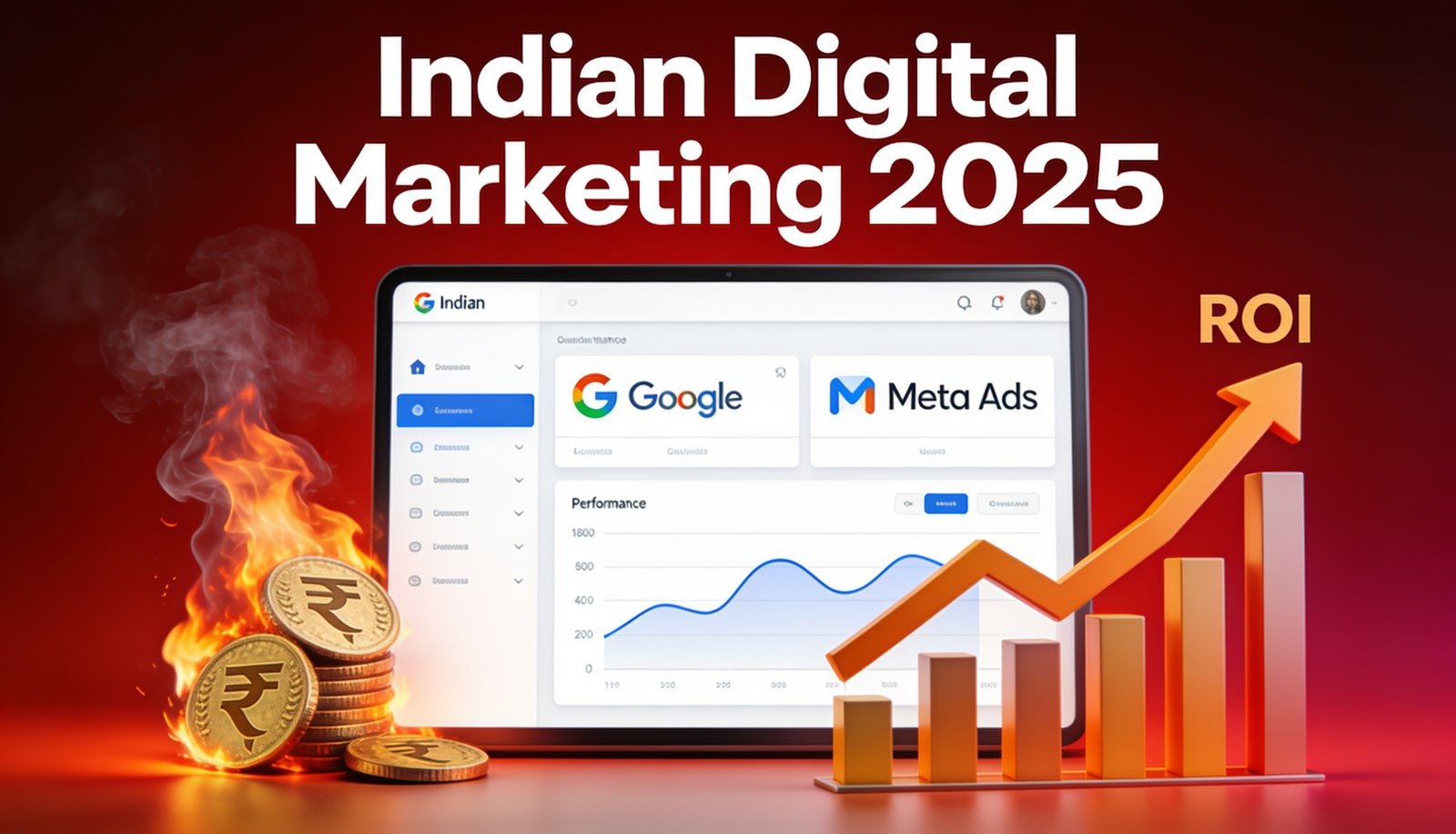
Most Indian businesses running Google or Meta ads are spending ₹20,000–₹50,000 a month and getting nothing back. Here’s exactly why — and what the ones getting ROI are doing differently.
Why “Boosting Posts” Is Not Performance Marketing
Every day we talk to business owners who tell us they “tried Facebook ads” and it didn’t work. When we dig in, the story is always the same: they boosted a post for ₹500, got 200 likes, and concluded that social media ads don’t work for their business.
That is not performance marketing. Performance marketing is a disciplined, data-driven process of running campaigns with clearly defined objectives, tracking every rupee of spend against every rupee of revenue, and optimising relentlessly until the math works. It requires the right campaign structure, the right creative, the right audience targeting, and above all — the right landing page. Miss any one of these and your budget disappears into a black hole.
The 5 Most Common Reasons Ad Budgets Get Wasted in India
❌ Mistake 1: Sending Traffic to Your Homepage
Your homepage is designed for people who already know you. Ad traffic is cold — strangers who need to be convinced in 5 seconds. Sending them to a homepage with 10 different things to click is a guaranteed way to waste money. Every campaign needs a dedicated landing page with one goal, one offer, and one CTA.
❌ Mistake 2: Targeting Too Broad or Too Narrow
Running a women’s clothing ad to “all women in India aged 18–45” is too broad — you’re competing with every fashion brand on Meta. Running it to “women in Ludhiana aged 25–32 who follow 3 specific boutique pages” is too narrow — you’ll exhaust the audience in 3 days. The sweet spot is a calculated middle, informed by your actual customer data.
❌ Mistake 3: Not Tracking Conversions — Only Clicks
Clicks and impressions are vanity metrics. The only metric that matters is cost per lead or cost per purchase. If you don’t have the Meta Pixel, Google Tag, and conversion events set up correctly, you’re flying blind. You genuinely cannot know which ad, which audience, or which creative is making you money.
❌ Mistake 4: Changing the Campaign Every 3 Days
Meta’s algorithm needs at least 7–14 days and 50+ conversion events to exit the “learning phase” and optimise effectively. Business owners who see no results in day 3 and panic-edit the campaign reset the learning phase — and then wonder why ads never work for them. Patience and discipline are as important as strategy.
❌ Mistake 5: Using the Same Creative for 60 Days
Ad creative gets “tired” — the same audience sees the same ad repeatedly and stops engaging. Click-through rates drop, costs per click rise, and results collapse. A proper performance marketing setup includes a creative refresh cycle: new images, new copy, new hooks, every 2–3 weeks.
What a Real Performance Marketing Setup Looks Like
✅ Proper Tracking: Pixel + GTM + Server-Side Events
We install Meta Pixel, Google Tag Manager, and server-side conversion API so every purchase, form fill, and WhatsApp click is tracked accurately. With iOS privacy changes, client-side tracking alone misses 30–40% of conversions — server-side fills the gap.
✅ Campaign Structure: Awareness → Retargeting → Conversion
We run three layers simultaneously: top-of-funnel awareness ads to cold audiences, middle-funnel retargeting to people who visited your site or watched your videos, and bottom-funnel conversion ads to people who added to cart or submitted a form. Each layer has its own budget, creative, and KPI.
✅ Landing Pages Built to Convert
Every campaign gets a dedicated landing page — built by us — with a single offer, social proof, fast load time, and a CTA above the fold. The landing page is what actually converts the traffic. The ad just gets people there.
✅ Weekly Reporting With Real Numbers
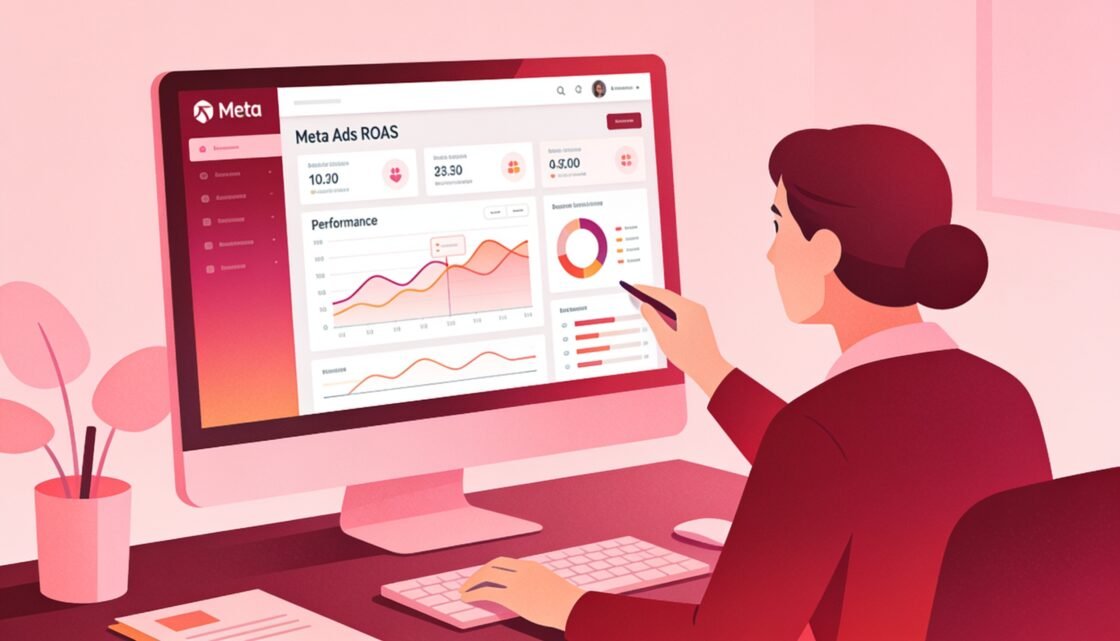
Every week you get a report: spend, leads, cost per lead, cost per purchase, ROAS, and recommendations for the next week. No vanity metrics. No hiding behind impressions and reach. Just the numbers that tell you if you’re making money or not.
What Kind of ROI Is Actually Realistic?
For a well-structured ecommerce campaign with good creative and a converting landing page, 3–5x ROAS (Return on Ad Spend) is achievable within 60 days. That means ₹10,000 spent should generate ₹30,000–₹50,000 in revenue. For lead generation — service businesses, consultancies, real estate — a cost per lead between ₹150–₹400 is a reasonable benchmark depending on the industry.
These numbers are not promises. They’re what we see from clients who have proper tracking, a good product, and the patience to let the algorithm learn. The clients who never see results are almost always missing at least one of those three things.